Year 7
The group's own room
Mornings are spent here with the adults who know each child best: language arts and mathematics every day, science every week. The group is small enough that nobody is managed and everybody is known.
A case study by Trevor Cardozo
trevorcardozo.comA middle school for eleven to thirteen-year-olds, built inside a makerspace. I led it from a first question to an open house where families walked the rooms.
Year 7 opens in August 2027.
Year 7 learns upstairs. The rooms downstairs are where the afternoons happen. Choose a room.
The group's own room
Mornings are spent here with the adults who know each child best: language arts and mathematics every day, science every week. The group is small enough that nobody is managed and everybody is known.
Where the day starts
The morning opens here with a snack and a question, and the group eats lunch together at the same tables. Children who feel at home take bigger risks in their learning.
Real things from wood, by hand
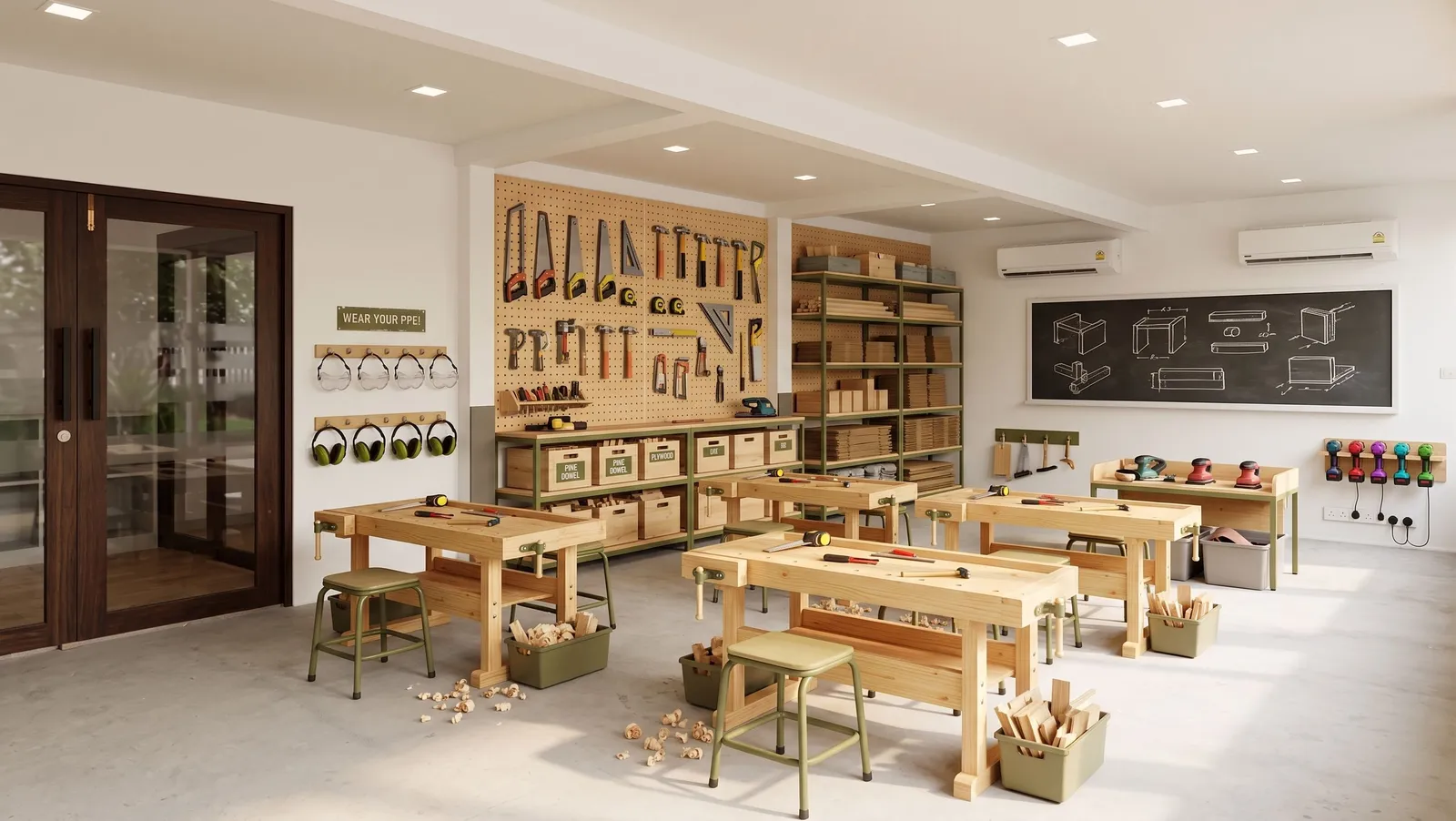
Children measure, cut and join wood into things people will actually use. They test an idea, show it to the group and change it while there is still time.
Designed on screen, held the same day
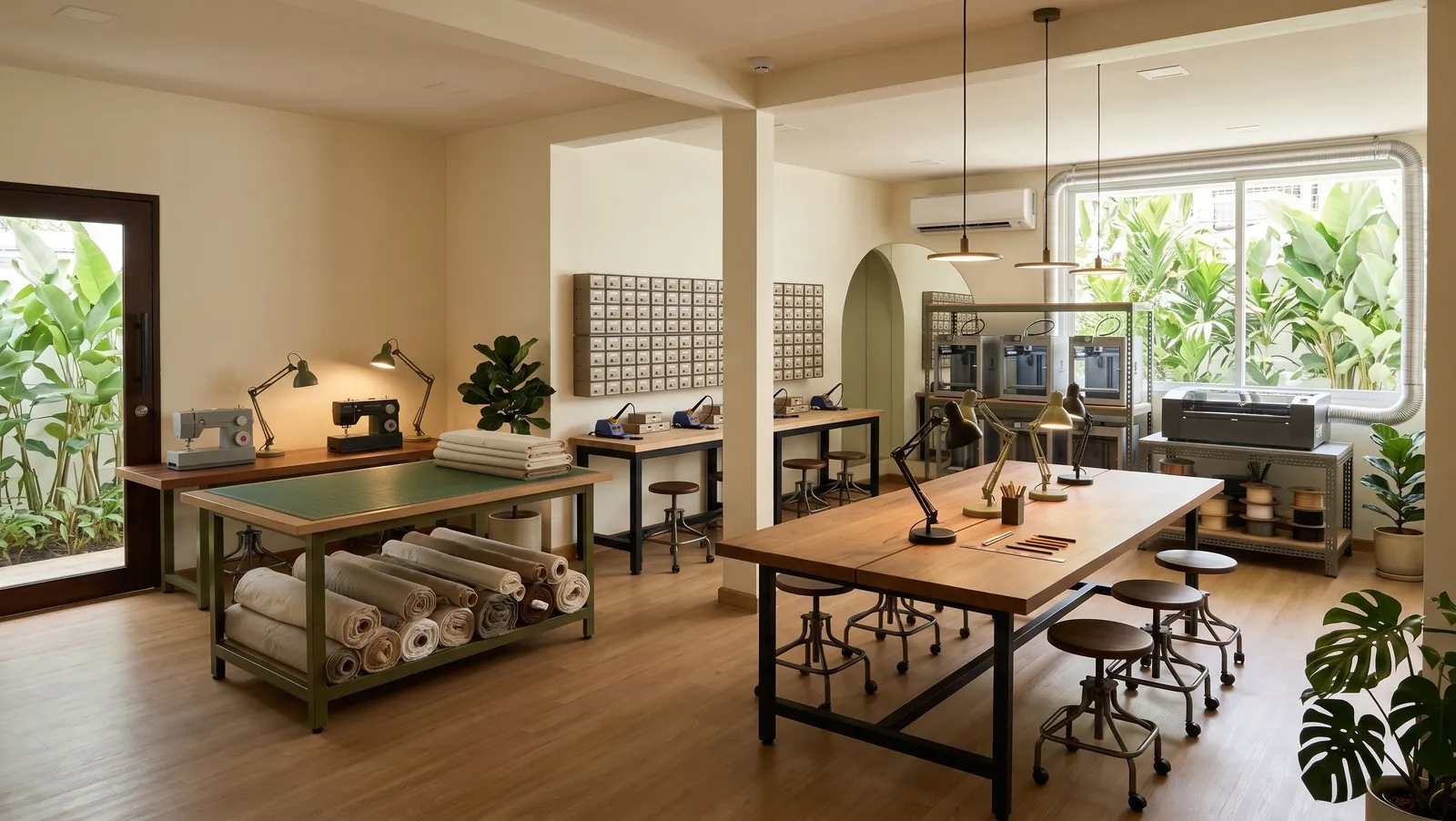
Digital fabrication, textiles and electronics share one room. When a print fails, the design changes and it gets made again.
A true story, told by making one
Children record sound, take photographs, film and edit their own work. A film could follow one cup of coffee, told by the people who grew and roasted it.
What grows is cooked
What grows in the garden is cooked here and served at the group's own table.
Real measurements, fair tests
A small room beside the kitchen, connected to the garden, set up whenever the class runs a test. Children change one thing at a time and keep everything else the same.
Growing beside science
Herbs, vegetables and fruit grow here, and what is left over from the kitchen goes back into the soil.
Room to move
A multi-purpose court is being designed for the front of the building, and the trees stay for shade. It opens with Year 7.
Most children leave their primary school at eleven for a much bigger secondary school. Families kept asking whether what their children had could continue for two more years.
The answer is a school built for eleven to thirteen: more independence and responsibility, and adults who know each child well while they work out who they are.
It makes three commitments to every child: to be known, to be stretched, and to leave ready for the next school.
Morning
Language arts and mathematics every day and science every week, on the curriculum the children already follow.
Afternoon
Children work to a brief, for people outside the classroom, with a date that doesn't move. The first theme is interdependence: how the parts of a system rely on each other. Coffee and the kitchen are two ways into it.
15:00
The last hour of the day is the one each child chooses. Over the year, each child builds an area of expertise.
I led the project, from the learning model and the week to the rooms, the signs and every page families read. The work reached families in four moments.
Large panels carried the argument, and posters stood where each room would be.
sent to every interested family, opening with a letter from the school’s director.
Forty-six panels, a curriculum booklet, and a wall where families added people and places their child should visit.
A visual system lifted from the pieces families had already held, a positioning, a message in four beats, and the research behind every claim.
Along the way, educators from other schools reviewed a working board, every room got a concept render, and one print system carried each change to every panel.
The pack, both print sets, the booklet, the working board and the brand are behind a password. Ask Trevor for it.